FOUR ASTRO METHODS; ONE BALANCED READING
Vedic, Western, KP and Nadi astrology methodology
A multi-method approach brings together complementary calculations and interpretive traditions without overwhelming the client.
Vedic + KP + Western + Nadi — A thoughtful consultation begins with the right question


Vedic Astrology
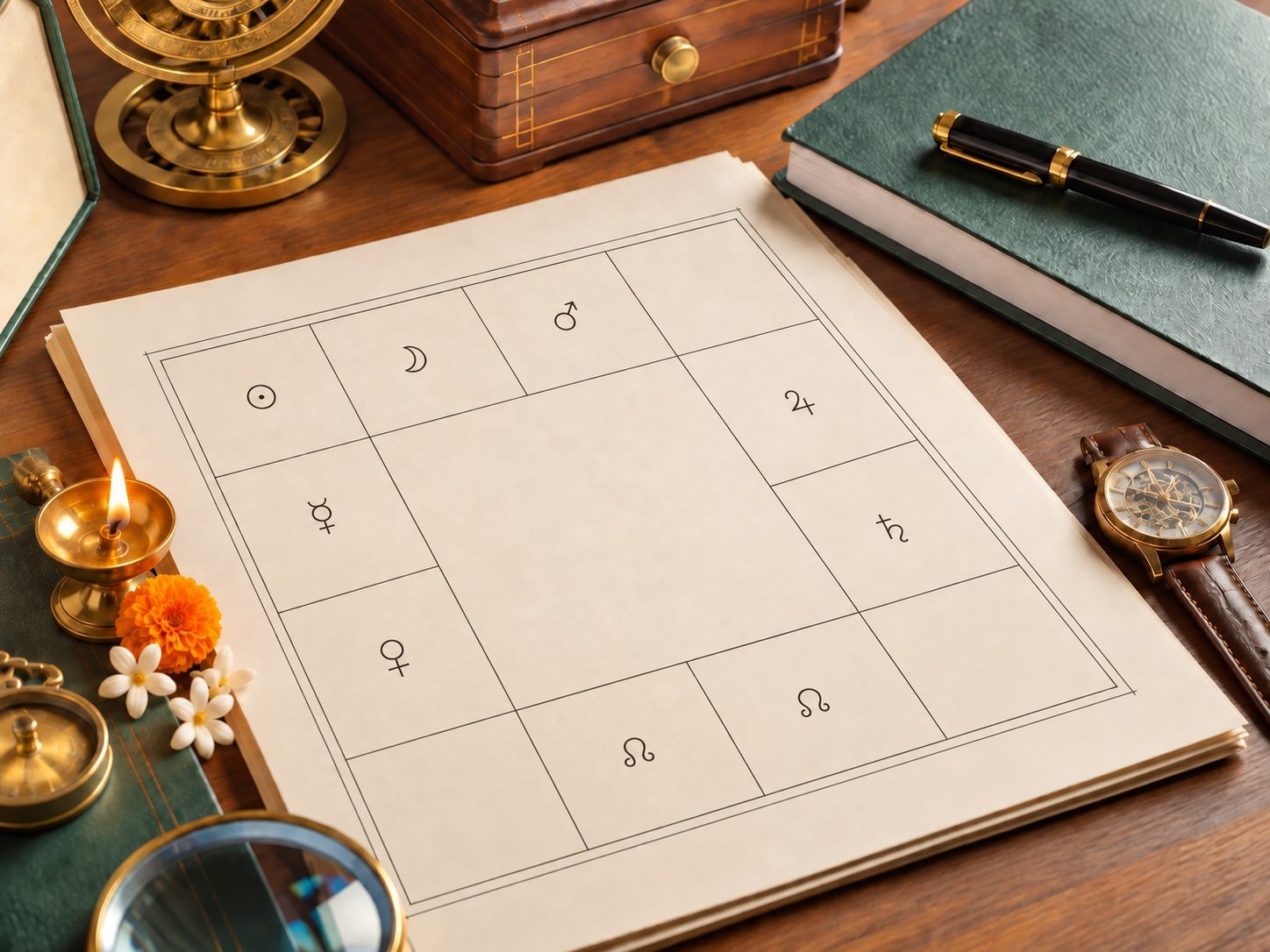
Vedic Astrology forms the foundation of the reading. It maps the overall structure of the birth chart, examines planetary strength, and works through important life periods called dashas alongside current transits. This is the method most useful for identifying the broader themes running through a person’s life and the general timing around them.
KP Astrology
KP Astrology comes into its own when there is one focused, specific question to answer. It studies house cusps, significators and sub-lords in fine detail, going a level deeper than the traditional system to examine whether a particular event is genuinely supported by the chart, and roughly when that period may become active.
A foundation in Vedic Jyotisha
Vedic Jyotisha frames the broader chart and timing. KP, Western and Nadi add complementary perspectives where relevant.

Western Astrology
Western Astrology adds a complementary layer through planetary aspects, transits and psychological patterns. Where Vedic and KP focus more on timing and events, this method helps explain the person behind the chart, personal tendencies, recurring emotional responses, and how someone is likely to experience and react to a given situation.

Nadi Astrology
Nadi Astrology contributes a set of traditional rules connecting planets, houses and events in a highly distinctive way, drawn from a much older interpretive tradition. These principles are never taken in isolation; they are used carefully and always cross-checked against the other three methods rather than treated as a stand-alone certainty on their own.
Cross-reference before conclusion
The four methods do not have to give identical answers. I first look for themes that repeat across the systems, then examine any differences and the reason behind them. This cross-checking helps reduce one-sided interpretation and leads to a more balanced, practical explanation connected to the client’s actual question.